
Breast Lift
✦ GLANDULAR SUSPENSION ✦
Precision Breast Lift & Suture Suspension (Mastopexy)
ADVANCED MASTOPEXY & SUSPENSORY LIGAMENT RESETTING
------
Changes from aging, pregnancy, or weight fluctuations can stretch the breast's supporting networks. Rather than just tightening the outer skin—which can cause scars to widen—our technique focuses on internal muscle-fascia suspension loops. By anchor-looping relaxed glandular structures back to the deep chest fascia, we build a stable internal support framework for enduring lift.
Mastopexy is not merely skin tightening; it is a profound structural restoration. Using internal glandular suspensory loops, we lift and anchor relaxed tissue directly to the deep chest muscle fascia, establishing a robust, durable support network for an enduring natural contour.
TARGET SCOPES
Clinical Introduction
What Is a Breast Lift?
A Breast Lift procedure is designed to improve excess skin and underlying tissues that have become loose and flabby. This is very common and can be a result of age, genetics, pregnancy, breastfeeding, or large amounts of weight loss. A breast lift may be combined with breast augmentation for a fuller look or may be performed on its own to give breasts a lift and a perkier appearance.
People could have droopy breasts for all kinds of reasons: weight loss, congenital factors, large sizes, pregnancy, breastfeeding, or aging could all play a role.
Strategic Clinical Innovation
Breast Liposuction & Natural Elevation
Liposuction, when strategically performed, could solve the problem of a young person’s large and relatively droopy breasts. In some cases, the nipples could rise more than one inch, after “weight loss” from the breast liposuction. The prerequisite is that the breast is large with thick fat and the skin elastic.
Understanding Breast Sagging (Ptosis)
Before selecting a surgical path, we evaluate the anatomical changes in skin elasticity, tissue volume, and nipple position.
What is Breast Sagging (Ptosis)?
Breast sagging, medically referred to as ptosis, occurs when the breast tissue loses its firmness and elasticity, causing the breasts to droop or sit lower on the chest. This condition is a natural part of aging but can also result from pregnancy, breastfeeding, significant weight fluctuations, genetics, or gravity’s long-term effects on the skin and supportive suspensory ligaments.
While breast sagging is a common concern for many women, the degree of sagging can vary significantly. Factors such as skin elasticity, breast size, and the extent of tissue stretching all contribute to the severity of ptosis. Understanding the different grades of breast sagging helps in determining the most suitable breast lift technique for achieving desired results.
Regnault Classification System
Breast ptosis is classified into different grades based on the position of the nipple relative to the breast crease (inframammary fold). This widely recognized grading method helps surgeons accurately assess the degree of sagging and determine the most appropriate breast lift technique for optimal results.
STRUCTURAL TARGETS
Nipple Elevation: Shifting the complex upward to a natural, youthful position.
Areola Resizing: Reducing enlarged areolas to an elegant, symmetrical size.
Upper Pole Cleavage: Rebuilding volume in the flat upper portion of the breast.
Breast Sagging (Ptosis) Grades
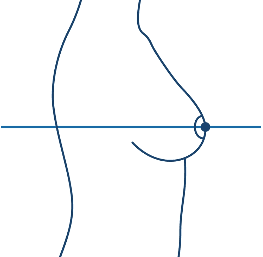
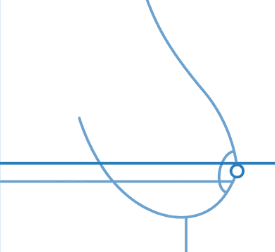
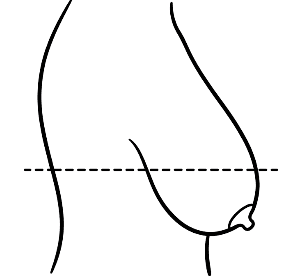
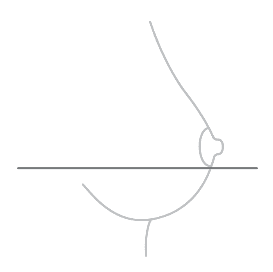
Breast ptosis is classified into different grades based on the position of the nipple relative to the breast crease (inframammary fold) following the Regnault Classification System. This widely recognized grading method helps surgeons accurately assess the degree of sagging and determine the most appropriate breast lift technique for optimal results.
Grade 1 (Mild)
Nipple sits at or slightly below the breast crease while maintaining a relatively natural position.
Grade 2 (Moderate)
Nipple is positioned noticeably below the breast crease, but still rests above the lower breast tissue.
Grade 3 (Severe)
Nipple sits well below the crease and points downward, aligning with the lowest point of the breast.
Pseudo-Ptosis (False)
Nipple remains above the crease, but lower breast tissue sags or empties noticeably below it.
CANDIDATE SUITABILITY
Who is an Ideal Candidate for Breast Lift Surgery?
Whether caused by life milestones or natural changes over time, a breast lift is highly customizable. Ideal candidates typically match one or more of the following profiles:
🤰
Post-Pregnancy Restructuring
Women whose breasts have deflated or stretched following childbirth and breastfeeding, leaving loose skin and less upper volume.
SOCIETY METRIC 01
⚖️
Post-Weight Loss Restoration
Individuals who have achieved major weight reduction, resulting in loose, drooping breast skin and a flatter chest profile.
SOCIETY METRIC 02
⏳
Natural Age-Related Changes
Those experiencing a loss of skin elasticity and support over time, causing the nipples to sit below the breast crease.
SOCIETY METRIC 03
✨
Symmetry Correction
Patients looking to correct breasts of different sizes, shapes, or positions, bringing them into healthy alignment.
SOCIETY METRIC 04
🩺
Stable Health & Expectations
Non-smokers in good physical health with stable weights who seek natural contouring and understand the recovery timeline.
SOCIETY METRIC 05
⚠️ Critical Medical Requirement for Mastopexy Candidates: Because a breast lift involves lifting the nipple-areola complex and trimming loose skin, maintaining healthy, active blood flow to the skin flaps is essential for safe wound healing. Candidates must strictly avoid all forms of smoking, vaping, or nicotine products for at least 4 to 6 weeks before and after surgery to prevent tissue healing delays or scarring complications.
CLINICAL PATHWAY
The Glandular Lift & Suture Suspension Process
From meticulous standing calibration mapping to deep internal tissue support structures.
📐Standing Calibration & Custom Suture Anchoring
The success of a breast lift relies on meticulous standing measurements performed before you enter the operating room. Our surgeons map out the precise new position of your nipples, ensuring perfect balance and symmetry.
Unlike traditional lifts that simply pull the skin—which often results in stretched, widened scars and early re-sagging—our approach centers on **Internal Glandular Suspension**. We construct a strong internal support system by suturing the relaxed breast tissue directly to the deep chest muscle fascia (pectoralis major fascia) with durable suture loops.
Core Surgical Phases of Mastopexy
01 / Pre-operative Marking
The surgeon takes precise physical measurements while you are in an upright standing position to map out the ideal, symmetrical nipple-areola location.
02 / Anesthesia Protocol
Administered by senior anesthesiologists under general anesthesia or twilight sedation, guaranteeing absolute comfort and safety.
03 / Glandular Suspension
The surgeon shifts and reshapes the deep glandular tissue, anchoring it higher directly onto the deep chest pectoralis major fascia.
04 / Nipple-Areola Elevation
Moving the nipple higher while carefully preserving underlying nerves and milk ducts to protect sensation and future breastfeeding.
05 / Areola Resizing
Surgically reducing the diameter of enlarged areolas to achieve harmonious, balanced aesthetic proportions.
06 / Tension-Free Closure
Trimming loose outer skin and closing incisions in multiple layers with ultra-fine sutures, minimizing tension to encourage clean, flat scars.
CLINICAL METRICS
Breast Lift Fast Facts
Operation Duration: 2 to 3 Hours
Anesthesia Method: General Anesthesia
Hospital Stay Type: Outpatient / 1 Night Stay
Average Recovery Window: 4 to 6 Weeks
Initial Downtime: 5 to 7 Days (Light desk activities approved)
Suture Removal: 7 to 10 Days
Exercise Restriction: Avoid heavy cardio/lifting for 4-6 Weeks
Surgical Garment Support: Specialized post-op bra worn 24/7 for 6 Weeks
*Clinical timelines and parameters may vary based on tissue elasticity and combined procedures.
SURGICAL TYPES & INCISIONS
Types of Breast Lift Incisions
Different breast lift incision techniques are selected based on the degree of sagging, breast anatomy, and desired results. Each approach is carefully planned to achieve a firmer, lifted breast appearance while keeping scarring as discreet as possible.
We select incisions based on the degree of ptosis (sagging) to balance maximum uplift with the smallest possible scar footprint.
Incision Scheme
- Crescent / Donut Lift
- Primary Indications: Best for mild sagging (Grade I / Mild ptosis) and moderate areolar expansion.
- Incision Trace Detail: Incision sits strictly on the outer border of the areola. Becomes practically invisible over time.
- Internal Biomechanical Repair: Excises a concentric ring of skin, pulling the areola upward while tightening the outer dermal perimeter.
- Clinical Signature: Dual-Suture Multi-Vector Interloop Fixation
- Lollipop Lift
- Primary Indications: Our standard for moderate sagging (Grade II). Excellent combination of tissue reshuffling & minimal scarring.
- Incision Trace Detail: A neat line surrounding the areola and running vertically down to the crease.
- Internal Biomechanical Repair: Excises lateral skin wedges, tightens Cooper's ligaments internally, and rotates the entire gland upward.
- Clinical Signature: Dual-Suture Multi-Vector Interloop Fixation
- Wise Pattern / Anchor
- Primary Indications: Engineered for severe sagging (Grade III / Post-massive weight loss deflation).
- Incision Trace Detail: Runs around the areola, vertically down, and horizontally along the inframammary fold.
- Internal Biomechanical Repair: The gold standard for maximum skin resection. Thoroughly reshapes massive skin excess and creates a long-lasting internal glandular brassiere.
- Clinical Signature: Dual-Suture Multi-Vector Interloop Fixation
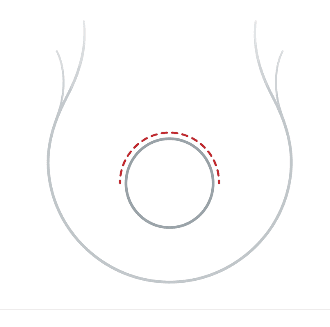
Crescent Incision
A small semi-circular incision made along the upper half of the areola. Best suited for very mild sagging.
Peri-Areolar (Doughnut)
A circular incision surrounding the entire perimeter of the areola. Ideal for mild to moderate sagging.
1.png&w=3840&q=75)
Vertical (Lollipop)
One circle around the areola and one vertical line straight down to the fold. Perfect for moderate ptosis.
1.png&w=3840&q=75)
Anchor (Wise-Pattern)
Incisions around the areola, vertically down, and horizontally along the crease. Best for severe ptosis.
1.png&w=3840&q=75)
CLINICAL ADVANTAGES
Why Choose Our Partnership in China for Breast Lift?
We combine highly specialized microsurgical techniques with top-tier hospital infrastructure to offer beautiful, lasting aesthetic results.
🧵
Internal Fascial Loop Fixation
Our partner surgeons utilize advanced internal suspension sutures to anchor relaxed tissue directly to the chest fascia. This internal support reduces tension on the skin, helping scars heal exceptionally thin and flat.
STABLE INTERNAL BRASSIERE
🔬
Endoscopic Visualization
Using advanced high-definition endoscopic arrays, surgeons identify and protect nerves, arteries, and mammary ducts. This results in minimal tissue disruption, reduced bruising, and preserved nipple sensation.
HIGH PRECISION POCKET SEPARATION
🎨
Advanced Hybrid Sculpting
We excel in combining lifts with immediate fat transfer or cohesive gel implants. This ensures that while the breast is lifted, any upper pole deflation is beautifully corrected for a soft, natural cleavage.
INTEGRATED HYBRID DESIGNS
🇨🇳
Hospital Infrastructure
Enjoy accredited medical facilities, highly sterile laminar-flow surgical rooms, luxury recuperation suites, bilingual personal coordinators, and professional aftercare at highly competitive international rates.
ELITE CLINICAL COOPERATION
CLINICAL AFTERCARE
Advanced Clinical Aftercare & Recovery Roadmap
Proper postoperative recovery is vital to achieve beautiful, soft final contours. Below is our clinical milestone protocol, designed to guide you safely through each phase of healing and long-term health surveillance.
POST-OP WORKFLOW
Mastopexy Professional Aftercare
Your recovery journey is essential for allowing the internal support stitches to heal firmly. Swelling, bruising, and a feeling of tightness are normal reactions that gradually subside over several weeks.
Supportive Garment Rules: You must strictly wear your specialized post-operative medical support bra day and night (except during showers) for the first 6 weeks. This supports the newly shaped breasts and minimizes tension on scar lines.
Sleeping & Movement Guidelines: Sleep strictly on your back in an elevated position (at a 30-45 degree angle) for the first 2-3 weeks. Avoid sleeping on your side or stomach. Restrict heavy arm elevation and avoid lifting anything over 10 lbs for at least 3 weeks.
Scar Therapy: Once the incisions have closed and sutures are removed (usually around day 10), we will guide you on applying medical silicone scar gels or sheets to help the incisions fade smoothly.
*Our team conducts remote monitoring video sessions at 1, 3, 6, and 12 months for all international recovery clients.
RECOVERY CARE
Clinical Safety, Risks
Comprehensive risk prevention and expert post-operative guidelines designed to support a safe, comfortable, and beautiful recovery.
Understanding Potential Concerns & Protective Measures
Active clinical prevention is key to a smooth healing process. Below is our clinical risk-mitigation framework:
Potential Concern & Clinical Preventive Action
- Incision Scarring
Using multi-layered deep suturing to absorb tension, applying medical silicone gel sheets, and avoiding heavy strain on the healing incisions.
- Asymmetry
Utilizing highly precise standing measurements and markings prior to surgery to calibrate nipple heights and tissue volumes.
- Nipple Sensation Changes
Applying microscopic dissection to avoid main sensory nerve branches. Minor numbness usually resolves naturally within several months.
- Swelling & Bruising
Wearing a specialized supportive medical bra 24/7 to control fluid retention, reduce movement, and support skin retraction.
- Delayed Wound Healing
Ensuring candidates are non-smokers and applying sterile, protective surgical dressing protocols with regular follow-up visits.
Healing Phases
Recovery Timeline & Protocols
Restoring body contours is a collaborative journey. Understand your milestones from the first hours after surgery to long-term tissue stabilization.
Phase 1: Days 1 - 3
Rest & Support
Rest comfortably in an elevated position (at a 30-45 degree angle) to control breast swelling. Wear your specialized supportive surgical bra 24/7 to support the tissue lift and protect healing skin.
Milestone: Sleep strictly on your back; avoid raising elbows above shoulders; restrict arm movements.
Phase 2: Days 4 - 14
Wound Care & Suture Removal
Local swelling begins to subside. Incision care is critical; keep dressings clean and dry. Sutures are carefully removed at our clinical facility between days 7 and 10.
Milestone: Return to light desk work. Start gentle, slow walking to encourage circulation.
Phase 3: Weeks 3 - 6
Tissue Softening & Activity
Internal breast tissues gradually soften. You can begin daily scar massage therapies using silicone gels once cleared by the surgical team. High-impact cardio or heavy weight lifting remains prohibited.
Milestone: Transition to comfortable, non-underwire sports support bras. Resume light, low-impact exercise.
Phase 4: Months 3 - 12
Maturation & Final Results
Your breasts settle fully into their final, soft, and natural positions. Swelling resolves completely, and the scar lines fade from pinkish-red to fine, soft silvery-white lines with consistent scar care.
Milestone: Full clearance for all athletic activities. Enjoy the stable, lifted profile.
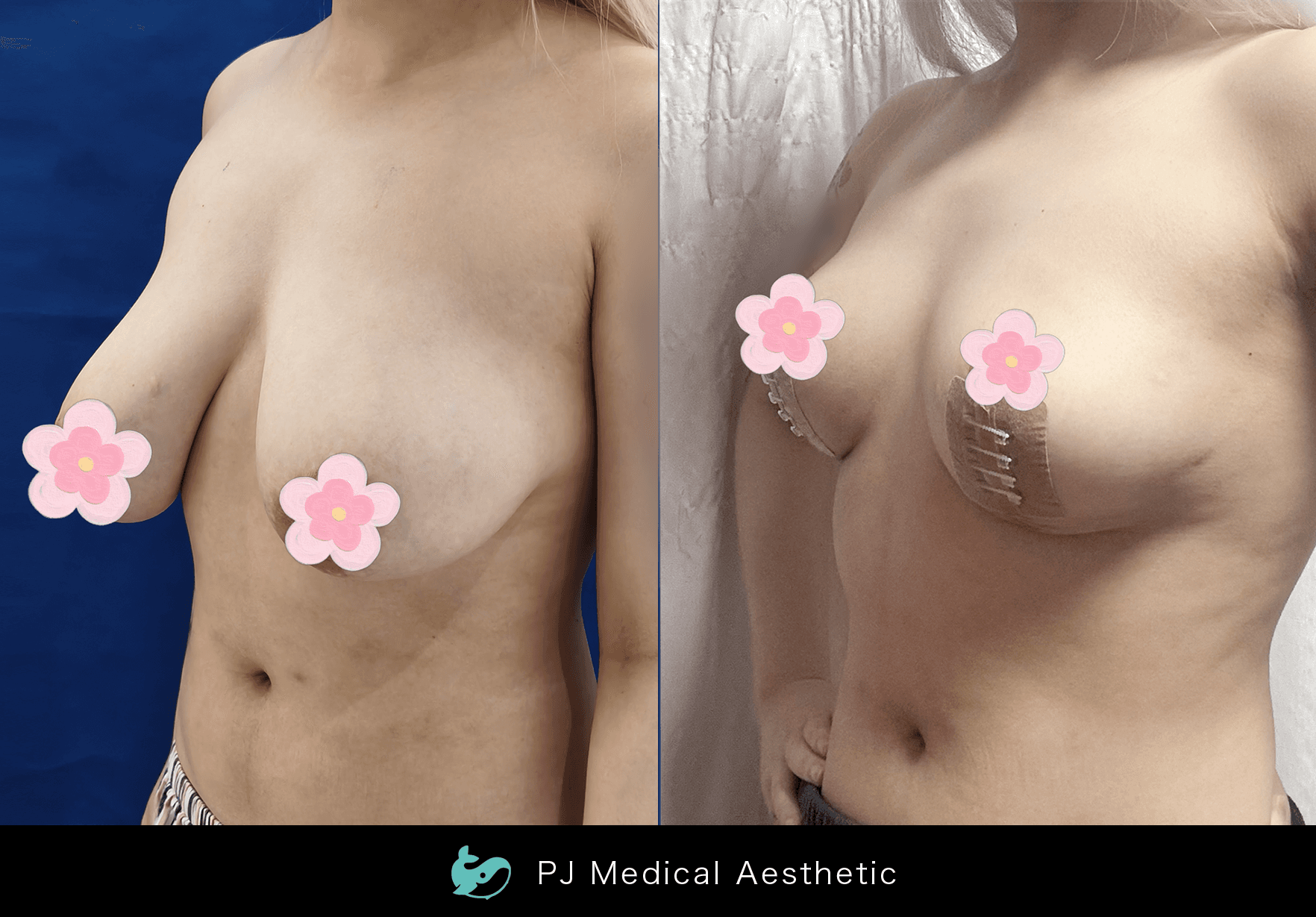
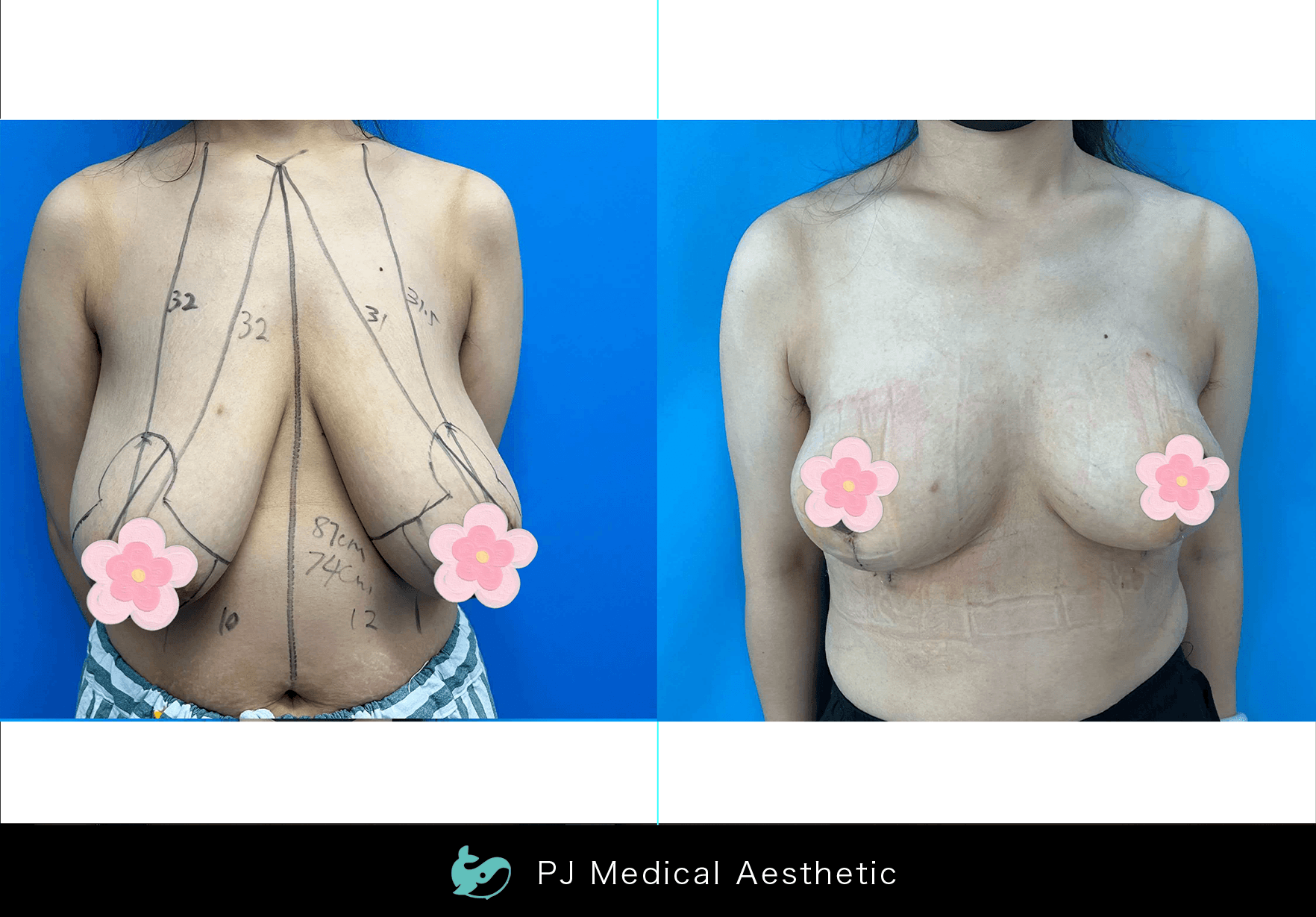
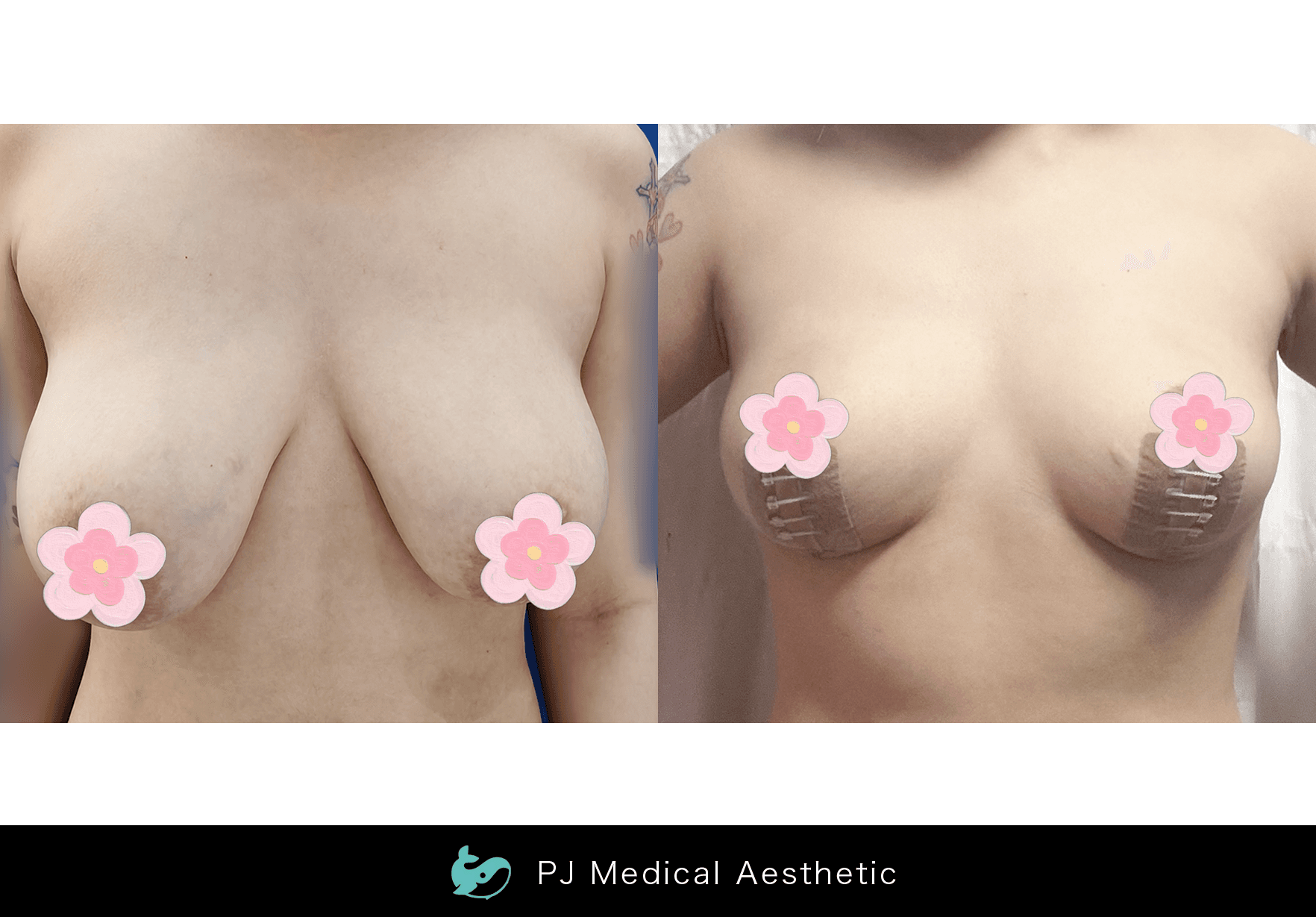
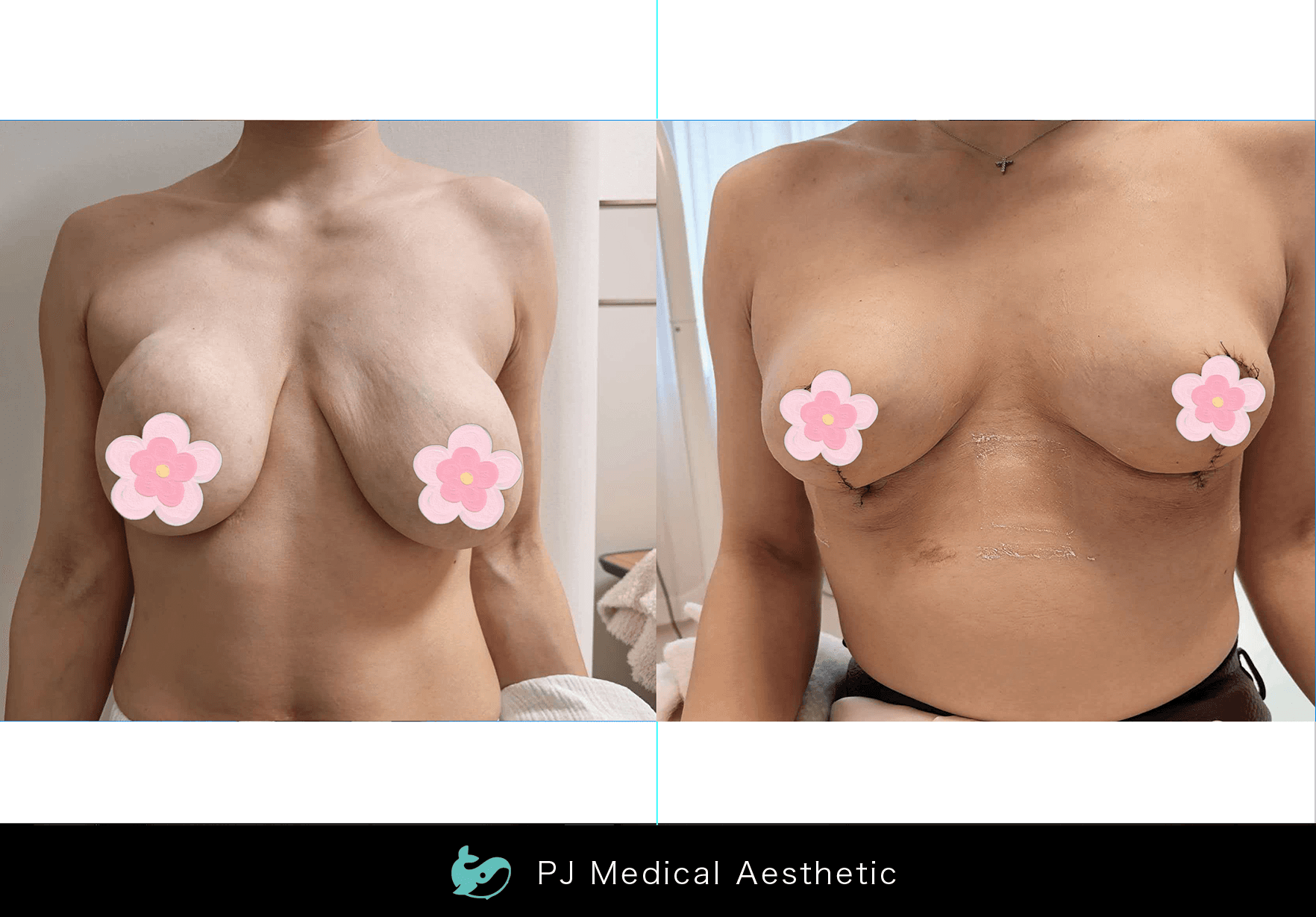
Before&After
Breast Lift
Frequently Asked Questions
Breast Lift Q&A
Explore medical insights and personalized answers about this procedure.
Is a breast lift surgery painful, and how is discomfort managed?
A breast lift is typically performed under general anesthesia or deep intravenous sedation, ensuring you are completely comfortable and pain-free during the operation. After surgery, it is normal to experience temporary soreness, swelling, tightness, and mild bruising as the tissues heal. Any post-operative discomfort can be managed effectively with prescription pain medication or mild over-the-counter options, alongside local cold compresses to reduce swelling.
How many follow-up appointments are required after a breast lift?
Your surgical team will schedule a series of follow-ups to monitor your healing progress. Typically, the first visit occurs 7 to 10 days post-surgery to check incision healing and remove any sutures or supportive dressings. Subsequent follow-up appointments are scheduled over the following weeks and months to ensure tissues are softening beautifully, symmetry is preserved, and you are fully satisfied with your recovery.
How long does it take to see the final results of a breast lift?
You will notice an immediate change in the position and shape of your breasts right after surgery. While the bulk of post-operative swelling resolves within 4 to 6 weeks, subtle residual swelling can persist. On average, it takes 2 to 3 months for the breasts to settle into their final natural position, and up to a year for the incision scars to fade and mature into their final flat, discreet appearance.
Can a breast lift be combined with other cosmetic surgeries?
Yes, combining a breast lift with other procedures is very common and highly effective. Many patients choose to combine a lift with breast implants or fat grafting to restore lost volume, or pair it with body contouring surgeries like a tummy tuck (abdominoplasty), liposuction, or an arm lift. Discussing these goals during your initial consultation allows us to design a safe, comprehensive surgical plan tailored to your anatomical needs.
What are the clinical risks and potential complications of a breast lift?
A breast lift is a safe, highly standardized surgery, but like any surgical procedure, it carries potential risks. These include reaction to anesthesia, temporary bleeding, fluid accumulation (seroma), minor infection, or hematoma (blood collection under the skin). There is also a small risk of temporary or permanent changes in nipple or breast skin sensation, asymmetry, or noticeable scarring. Our clinical protocols, including sterile, endoscopic-assisted techniques and multi-layer tension-free suturing, are designed to minimize these risks and ensure a safe, smooth recovery.
What is the ideal age to undergo breast lift surgery?
A breast lift is suitable for any adult over 18 whose breasts have fully developed. While many patients seek this procedure in their late 20s to 50s to address changes from pregnancy, breastfeeding, or weight loss, candidacy is based on physical health, skin elasticity, and the degree of sagging rather than age alone.
Can I combine a lift with an augmentation or reduction in the same session?
Combining a breast lift with either implants (augmentation) or a breast reduction is highly common and effective. However, the final recommendation depends on your skin's elasticity and the degree of sagging. In cases with compromised skin quality, your surgeon may occasionally suggest a staged approach (performing the lift and implant placement in separate sessions) to prioritize blood supply, secure healing, and achieve the most beautiful result.
Will a breast lift affect my ability to breastfeed in the future?
Using advanced, gland-preserving surgical techniques, we keep the underlying mammary glands and major milk ducts fully intact while elevating the nipple-areola complex. While many women are able to breastfeed successfully after a standard breast lift, extensive tissue repositioning can sometimes impact milk production or delivery. If breastfeeding is an important future goal, please share this with your surgeon during your consultation so we can design a highly conservative, gland-sparing surgical plan.
Does a breast lift significantly reduce my cup size?
A breast lift focuses on reshaping, elevating, and tightening the breast contour rather than removing volume. However, trimming excess sagging skin and gathering the relaxed tissue can cause your breasts to feel slightly more compact, occasionally leading to a reduction of about half a cup size in bra fitting. If you wish to maintain or increase your size, a combined breast lift and implant or fat grafting procedure is recommended.
Will the results of my breast lift look natural?
Yes, when performed with advanced structural suspension, a breast lift delivers highly natural-looking results. Rather than simply pulling the skin tight, the surgeon repositions the internal glandular tissue and nipple-areola complex back to their youthful positions, creating a soft, naturally rounded contour that moves organically with your body.
Is it possible to undergo a second breast lift surgery later in life?
Yes, a breast lift can be performed a second time if significant sagging occurs later due to natural aging, weight fluctuations, or subsequent pregnancies. Any repeat surgery requires a thorough individual evaluation of tissue elasticity, blood circulation, and previous incision lines to ensure a safe and successful outcome.
What changes can I expect regarding my nipples after a breast lift?
During the lift, the nipple-areola complex is elevated to a central, forward-facing position on the newly reshaped breast mound. While some temporary numbness or altered sensation is common immediately after surgery due to stretched nerves, normal sensitivity typically returns gradually over several months as the nerves heal.
How long do the results of a breast lift typically last?
The results of a breast lift are highly durable and long-lasting because we secure the underlying tissue directly to the chest muscle fascia. While no surgery can stop the natural aging process or gravity, maintaining a stable weight, wearing a supportive bra, and avoiding smoking will help preserve your lifted, youthful contour for many years.
Will the scars from my breast lift be highly visible?
Incision placement is carefully planned to be as discreet as possible. Depending on the technique used, scars may sit around the outer edge of the areola, run vertically down to the crease, or rest hidden within the under-breast fold. With advanced multi-layer suturing and post-operative scar management (such as silicone sheets and scar gels), these lines gradually fade over 6 to 12 months, becoming soft, faint, and inconspicuous.
What is the difference between a breast lift and a breast augmentation?
A breast augmentation is designed specifically to restore or increase volume using implants or fat transfer. In contrast, a breast lift (mastopexy) removes excess loose skin and reshapes internal tissues to correct drooping, sagging, and nipple height without altering the breast's actual volume. Many patients choose to combine both procedures for a complete rejuvenation that adds both fullness and lift.
Are there any effective non-surgical alternatives for a breast lift?
While there are many non-surgical products, exercises, or creams that claim to lift sagging breasts, none of them can physically reposition glandular tissue or trim excess loose skin. Currently, surgery remains the only clinically proven, effective method to lift and reshape sagged breasts. Minimally invasive energy-based treatments can provide very mild skin tightening but cannot correct moderate or severe ptosis.
What does the medical term 'ptosis' mean in relation to breasts?
'Ptosis' is the medical term for drooping or sagging. In breast aesthetics, it refers to the downward displacement of breast tissue and the nipple-areola complex. Ptosis is a natural result of aging, but its severity is heavily influenced by factors such as genetics, skin elasticity, weight changes, pregnancy, and breastfeeding.
Will I experience any changes in breast or nipple sensation?
Preserving normal sensation is a key priority during surgery. Some temporary numbness or altered sensitivity in the nipple area is common during the initial healing phase as nerves adjust. In the vast majority of cases, normal sensation returns gradually over 3 to 6 months, although there is a very small risk of permanent sensory changes in rare instances.
Want to learn about your Breast Lift options?
Book a one-on-one consultation for personalized advice.
Free Consultation